Project quality planning
Hotel Furniture Quality Control for Hospitality Projects
Define what must be checked, when it should be checked, who approves it, and what record is required. FurnishPact coordinates project-defined checkpoints around the approved drawings, samples, finishes, hardware, quantities, and packing plan.
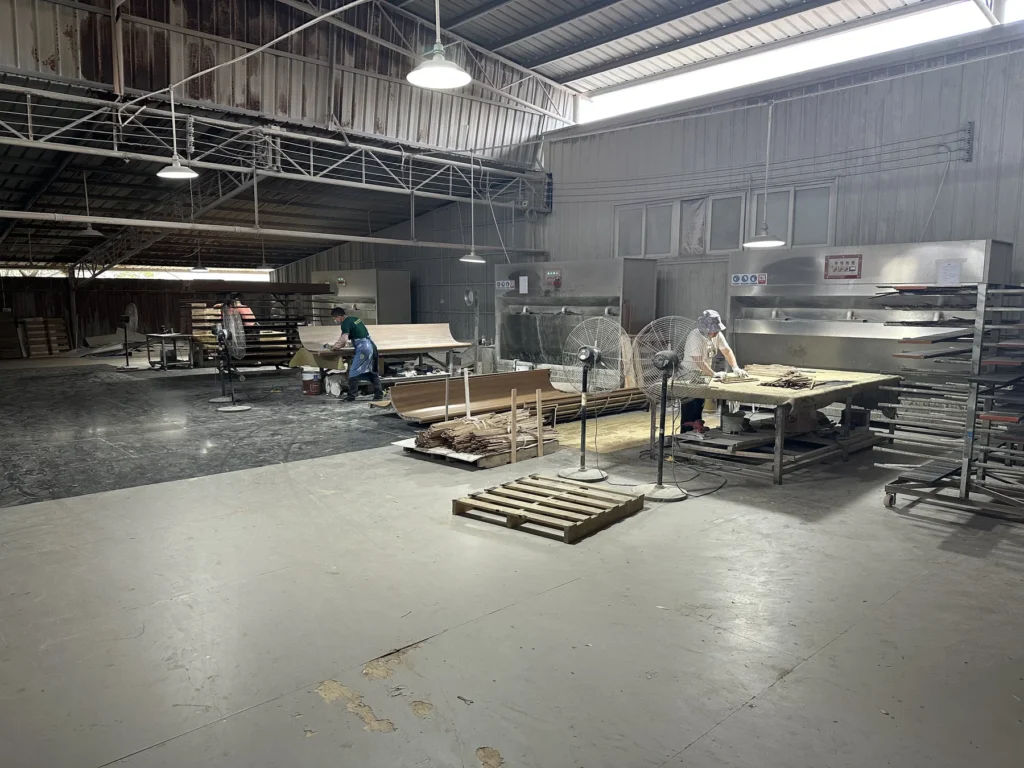
Quality starts with a clear baseline
Make acceptance criteria visible before production and packing
Website photographs show production context only. Quality requirements, inspection scope, records, acceptance criteria, and third-party responsibilities must be agreed for the actual project.
Specification Baseline
Reference the approved drawings, materials, dimensions, finishes, hardware, samples, quantities, and project-specific requirements.
In-Process Checkpoints
Identify the stages where components, interfaces, assembly, appearance, or other agreed characteristics should be reviewed.
Finish & Hardware Review
Compare color, sheen, grain direction, edge details, hardware, operation, and other agreed visual or functional references.
Pack-Out Confirmation
Coordinate product identity, quantity, accessories, labels, protection, room allocation, and destination requirements before shipment.
Production stages where reviews can occur
Surface preparation and component finishing in the workshop
These real factory photographs are not test reports or inspection certificates. They illustrate production stages where project-defined review points may be applied when included in the agreed quality plan.
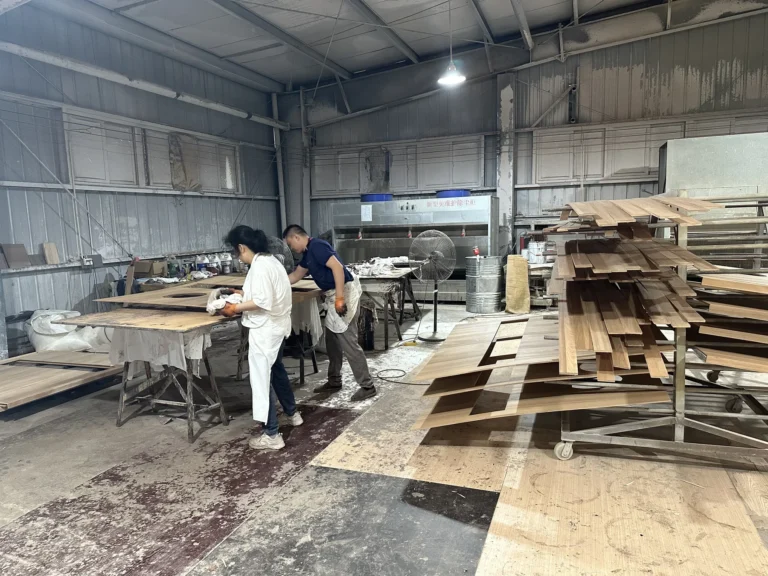
Surface & Veneer Preparation
Surface and veneer preparation can be compared with the approved appearance and construction direction before the next finish stage.
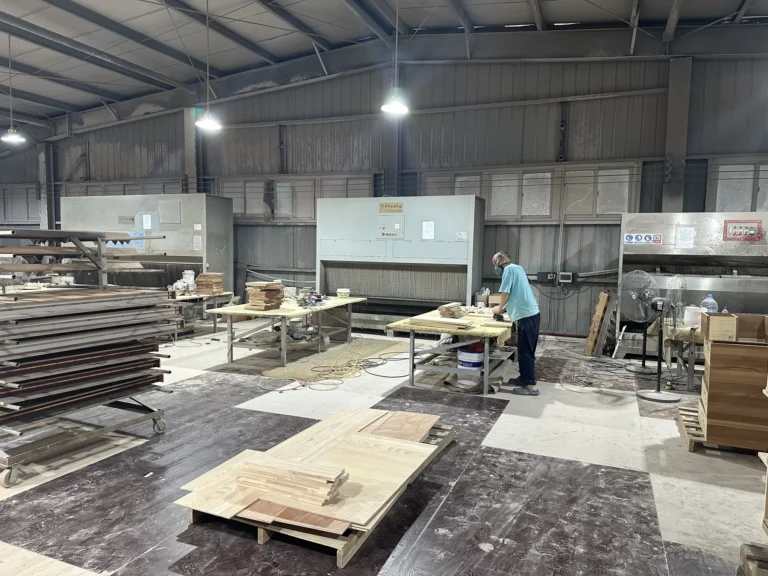
Component Finishing Stages
Components can be reviewed for agreed surface characteristics and part identity as they move through preparation and finishing.
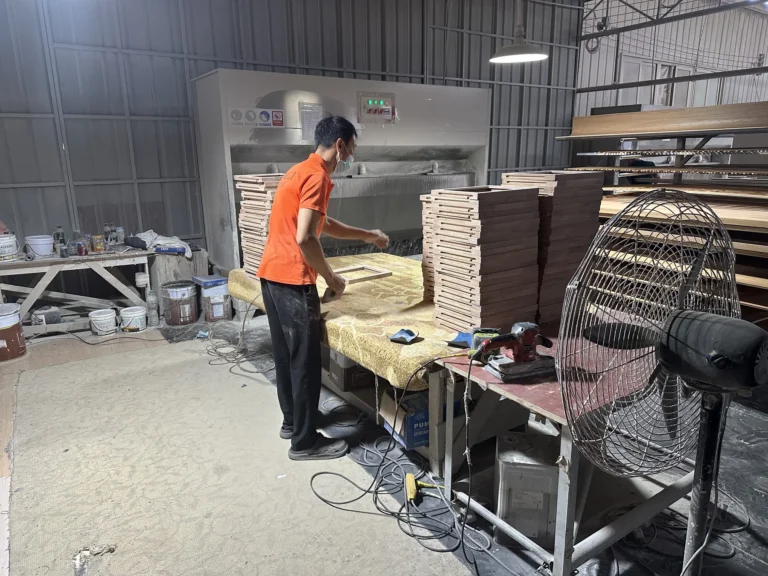
Parts Organized for the Next Stage
Finished components can be organized by part and reviewed before assembly, further finishing, or packing.
Five checkpoint groups
Build the quality plan around the approved project documents
Inspection frequency, sampling, tolerances, evidence, acceptance criteria, and responsibility are agreed separately for each project.
- Materials & ReferencesConfirm drawings, finish samples, materials, hardware, specifications, quantities, and any required supporting documents.
- Machining & IdentityReview agreed dimensions, edge details, drilling, cutouts, component codes, and other specified characteristics.
- Assembly & FunctionCheck fit, alignment, stability, clearances, hardware operation, service access, and interfaces as required.
- Surface & AppearanceCompare color, sheen, grain, texture, edge treatment, touch-up, and agreed visual references under defined conditions.
- Final Count & PackingConfirm product identity, quantity, accessories, labels, protection, packing method, and open punch-list closure.
Prepare the inspection conversation
State the required evidence and acceptance method early
A quality plan cannot replace missing specifications. Project-specific tests, certifications, tolerances, sampling rules, and third-party inspections must be defined before they can be priced or scheduled.
Requirements to share
- Approved drawings and written specifications
- Finish samples, material references, and hardware schedule
- Tolerances and acceptance criteria, where required
- Sampling or inspection requirements, if applicable
- Required photos, reports, records, or witness points
- Third-party inspection and shipment-release requirements
Items to confirm together
- Approved baseline and revision control
- Checkpoint stages and responsible parties
- Inspection frequency or sampling scope
- Comment, punch-list, and closure process
- Packing and labeling verification scope
- Records, third-party access, and release authority
Frequently asked questions
Quality scope is project-specific and document-led
Do not rely on a generic web claim where the specification, acceptance method, or responsible party is not defined.
Does this page establish compliance with a specific standard?
No. Compliance depends on the applicable project documents, product, market, testing method, evidence, and acceptance authority. Required standards or certifications must be supplied and confirmed for the project.
Can third-party inspection be arranged?
Third-party inspection can be discussed when the agency, scope, timing, sampling method, access, reporting, cost, and release authority are defined. No inspection service is included unless it is stated in the formal proposal.
How are finish samples approved?
The project should identify the reference sample, viewing conditions, approving party, acceptable range, labeling, and revision. The approved reference is then used in the agreed review process.
What should a model-room review cover?
A model-room review may cover fit, function, clearances, finish, hardware, equipment and power interfaces, service access, labeling, and punch-list closure. The project team defines the required scope.
What quality records can be provided?
Required photographs, check sheets, reports, certificates, or other records must be identified early. Availability, format, frequency, responsibility, and commercial impact are confirmed for the project.
Is packaging part of the quality plan?
Packing can be included as an agreed checkpoint covering product identity, quantity, accessories, protection, labels, room or floor allocation, and destination requirements.
Related pages
Talk to us about your project
Share your product list or drawings, quantities and destination. We reply on WhatsApp or by email.