OEM & ODM hotel furniture
Hotel Furniture OEM & ODM Manufacturing for Hotel Projects
Turn an approved drawing set, design brief, or reference concept into a coordinated manufacturing package. FurnishPact supports U.S. and Canadian hospitality buyers who need technical decisions, samples, and production inputs organized before release.
Choose the right development route
Separate drawing-led OEM work from design-development decisions
The route depends on the quality of the starting information, the number of unresolved decisions, and the approval process required by the owner, designer, brand, or purchasing team.
OEM from Approved Drawings
Review dimensions, materials, finishes, hardware, interfaces, quantities, and documentation supplied by the project team.
ODM Development Support
Organize the reference concept, functional requirements, dimensions, materials, and open design decisions into a reviewable development path.
Project-Specific Interfaces
Coordinate power, equipment, wall conditions, service access, adjacent furniture, and installation clearances where they affect the product.
Controlled Approval Baseline
Record the approved drawings, samples, finishes, hardware, and punch-list comments used to plan production.
Actual factory production
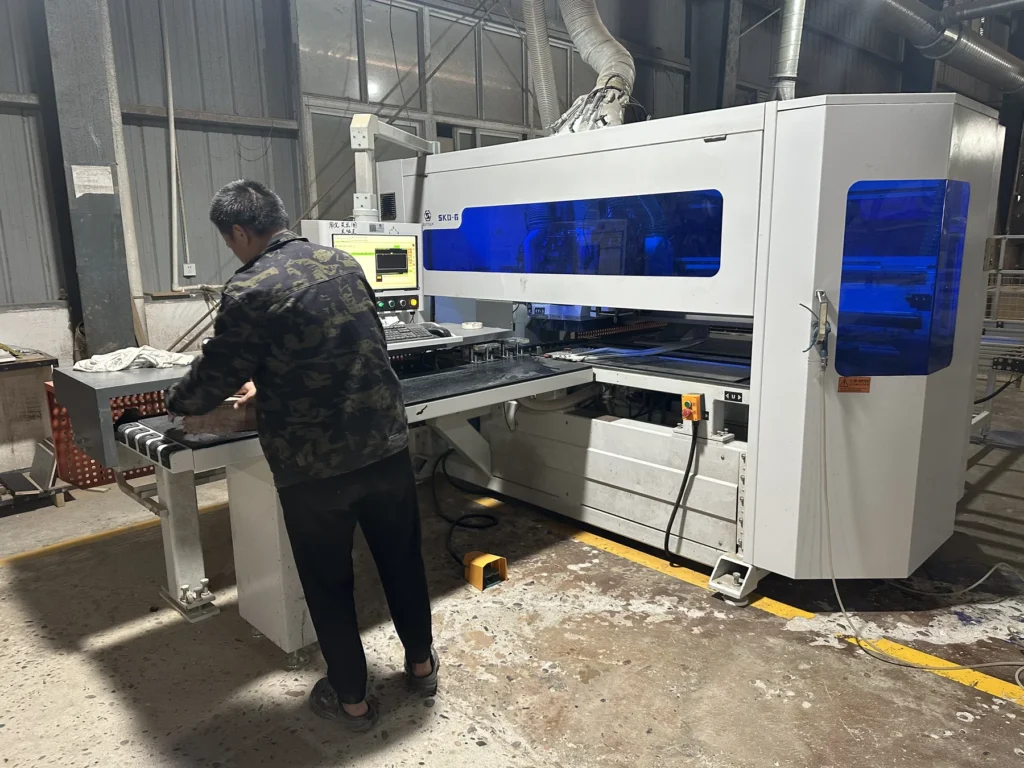
Machining and panel operations for custom components
The photographs below show real workshop equipment and production stages. They do not establish a specific machine capacity, tolerance, output, certification, or project result; those items require project documentation.
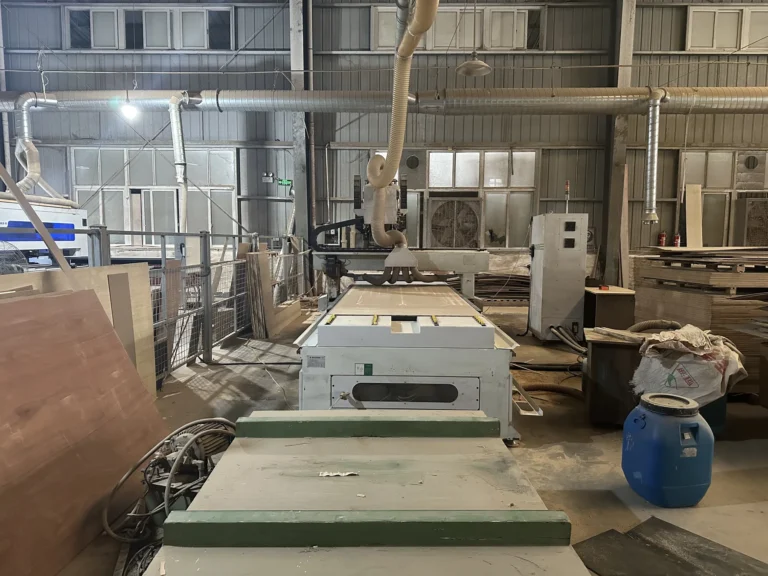
Programmed CNC Machining
Programmed machining can support repeatable component preparation after dimensions and component details are approved.
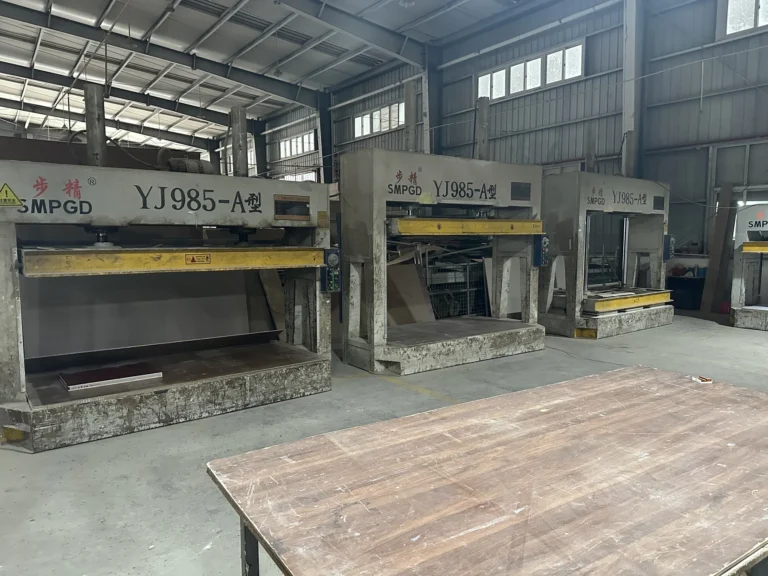
Panel Construction & Pressing
Panel construction requirements are coordinated with the approved project specification and finish direction.
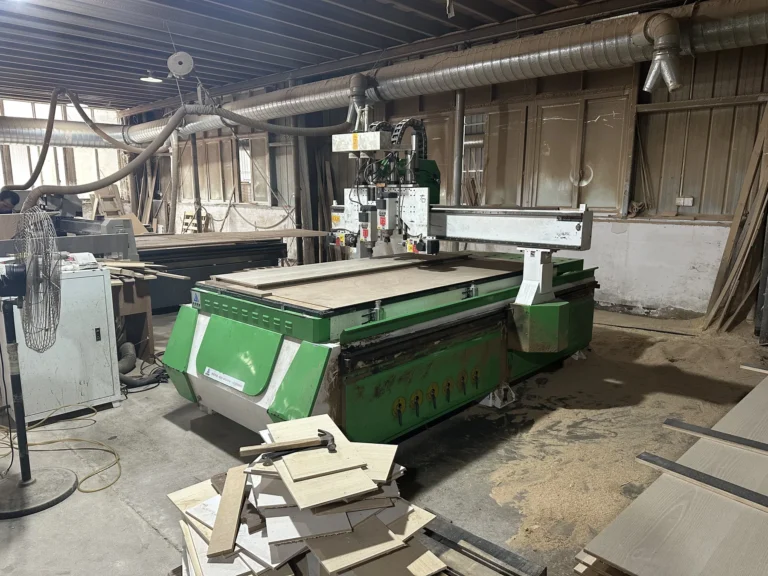
Custom Component Routing
Routing and machining operations follow the released component information and production sequence.
From brief to release
Use approval gates that make changes visible
The team agrees the required documents and approval owners before production is authorized.
- Submit the BriefShare drawings or references, room count, product scope, intended functions, finish direction, schedule, and destination.
- Review FeasibilityIdentify missing dimensions, material questions, interface risks, hardware decisions, and documentation needs.
- Develop SamplesCoordinate finish samples, details, prototypes, or a model room according to the agreed approval path.
- Freeze the BaselineRecord approved drawings, finishes, hardware, samples, and comment closure before the release decision.
- Plan Production & PackingConfirm quantities, sequencing, labels, packing protection, destination, and responsibility boundaries.
Prepare a useful development brief
Clarify what is fixed and what still needs development
A clear brief shortens the discovery process and reduces the risk that concept references are mistaken for approved production information.
Information to share
- Latest drawing or reference package
- Room count, room types, and product quantities
- Functional and dimensional requirements
- Materials, finishes, hardware, and equipment direction
- Required samples, prototype, or model-room path
- Approval owners, target schedule, and destination
Items to confirm together
- OEM or ODM responsibility boundaries
- Drawing and submittal register
- Open design and interface decisions
- Sample and finish approval references
- Change-control and release baseline
- Packing, labeling, freight, and commercial scope
Frequently asked questions
Define the OEM or ODM responsibility before pricing
The same reference image can lead to very different engineering, sample, documentation, and approval requirements.
What is the difference between OEM and ODM hotel furniture?
OEM usually begins with a more complete customer-controlled drawing and specification package. ODM requires more development of dimensions, construction, materials, appearance, or other decisions. The responsibility boundary is confirmed for the specific project.
What files should we provide?
Share the latest drawings, schedules, specifications, room information, finish and hardware references, quantities, target dates, and any brand or approval requirements available to the project team.
How much can be customized?
Dimensions, configuration, materials, finishes, hardware, power, equipment interfaces, and packing may be reviewed. Feasibility and commercial impact are confirmed after the requirements are understood.
Can you support a prototype or model room?
A prototype or model-room path can be discussed to review fit, function, appearance, interfaces, and punch-list comments. Scope, cost, timing, and approval responsibility are project-specific.
How are design files and commercial information handled?
Any confidentiality, ownership, permitted use, or file-control obligations must be stated in the applicable agreement with the confirmed contracting entity. The website does not create those terms.
What are the MOQ and lead time?
MOQ and lead time depend on the product mix, customization, quantity, sample and approval status, production plan, and destination. They are confirmed in the project proposal.
How we work with you
Seven review stages
Keep the project team aligned from brief to delivery planning
Each stage has a clear purpose and should identify open decisions before the next commitment.
Project Brief
Collect room count, drawings, brand standards, budget direction, product scope, target dates, and the project approval path.
Product Selection
Choose a standard concept, a room package, or a custom development path. Identify alternates separately.
Engineering Review
Confirm dimensions, materials, finishes, hardware, power, structure, equipment, and adjacent interfaces.
Prototype / Model Room
Review fit, operation, finish samples, service access, and the punch list before production approval.
Production & Quality
Confirm the inspection plan and only publish durability or test claims supported by actual documentation.
Packing & Delivery Coordination
Review product codes, room and floor labels, spare items, delivery phasing, and responsibility boundaries.
Reorder Support
Reorder support is discussed against the confirmed specification and is not promised until the business capability is verified.
Frequently asked questions
Commercial terms are confirmed for the actual project
Unknown values are not invented. Use the RFQ to provide enough context for a useful answer.
What is the MOQ?
MOQ depends on the product, customization, and project scope. Contact the project team with the product list and room count.
Can products be customized?
Customization may include dimensions, configuration, finish direction, hardware, power, equipment interfaces, and packaging, subject to engineering review.
Do you provide drawings?
Drawing and CAD availability is confirmed for the specific product and project. Initial website downloads are marked Available on Request.
Can you review COM or custom upholstery?
Share the proposed material, intended application, quantity, and required testing documentation for review. No acceptance is implied by the website.
How does a model-room review work?
The review normally closes fit, operation, finish, interfaces, and punch-list items before production approval. The exact path is agreed for the project.
What are the payment terms?
Payment terms are provided by the project team after the commercial scope and contracting entity are confirmed.
What is the lead time?
Lead time is not published until the product, quantity, customization, approval status, and delivery plan are confirmed.
How is furniture packaged?
Packaging and labeling are reviewed by product, room allocation, destination, and delivery method.
What warranty applies?
Every product we make carries a 5-year warranty. The terms are written into the project proposal and contract. Contact the project team for the applicable terms.
Who coordinates freight and installation?
Freight, customs, site delivery, storage, and installation responsibilities must be stated in the project proposal. The website does not assume those services.
Related pages
Talk to us about your project
Share your product list or drawings, quantities and destination. We reply on WhatsApp or by email.